

Learning the 6 Kalimas together as a family creates one of the most beautiful foundations for Islamic faith and identity. UK Quran Academy’s flagship 6 Kalima Course brings parents, children, and grandparents together in a warm, supportive learning environment where everyone can master these essential declarations of faith. The course combines traditional Islamic teachings with modern online learning methods, making it perfect for busy UK families who want to strengthen their connection to Islam.

The 6 Kalimas serve as the cornerstone of Islamic belief, and UK Quran Academy makes learning them simple, engaging, and accessible for learners of all ages through expert Qiraat instruction. Each Kalima carries deep spiritual meaning, from the basic declaration of faith to seeking Allah’s forgiveness and protection from disbelief. When families learn these together, they build shared understanding and create lasting bonds through their Islamic heritage.
This comprehensive course goes beyond simple memorization by teaching proper pronunciation through Qiraat, ensuring that every word is recited beautifully and correctly. Whether someone is five years old or seventy-five, the structured approach helps learners develop confidence in their recitation while understanding the profound meanings behind each declaration. The journey covers everything from basic pronunciation techniques to the spiritual significance of each Kalima in daily life.
Why Learn the 6 Kalmah as a Family
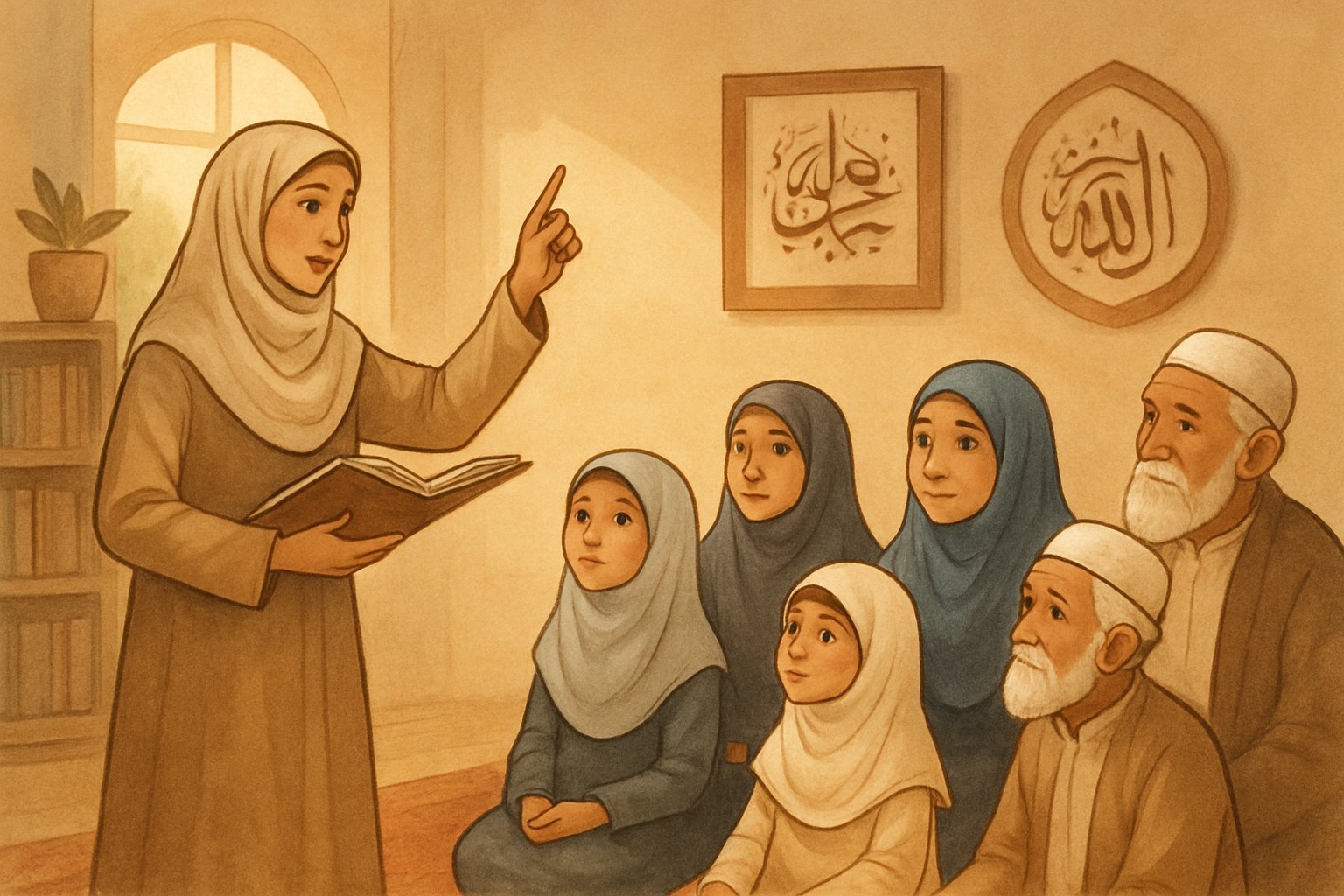
Learning the six kalimas together creates a shared foundation that strengthens every family member’s connection to Islam while building Allah’s oneness into their daily lives. When families study these essential declarations together, children and adults both develop deeper islamic beliefs through proper recitation and understanding.
Foundation of Islamic Beliefs
The six kalimas serve as the cornerstone of every Muslim’s faith journey. These powerful declarations contain the most important islamic beliefs that every family member needs to understand.
Each kalima teaches specific aspects of faith. The first kalima establishes Allah’s oneness and Prophet Muhammad’s role as messenger. The second kalima provides the formal testimony of faith that every Muslim must know.
Key beliefs covered in the six kalimas:
- Unity of Allah (Tawheed)
- Prophethood of Muhammad (PBUH)
- Seeking Allah’s forgiveness
- Rejecting false beliefs
- Praising Allah in all circumstances
When families learn these together, parents can explain complex concepts in simple terms. Children absorb these fundamental truths naturally when they hear them repeated at home.
The islamic foundation becomes stronger when multiple generations study the same material. Grandparents, parents, and children all benefit from reviewing these core beliefs together.
Strengthening Imaan for All Ages
Family learning creates unique opportunities to strengthen faith across generations. When children see their parents and grandparents memorizing the same kalimas, it shows them that Islamic learning never stops.
Adults often rediscover the beauty of these declarations when they study alongside their children. The simple explanations needed for kids help adults understand the kalimas more clearly too.
Benefits for different family members:
- Children: Build confidence in Islamic identity
- Parents: Refresh their own knowledge while teaching
- Grandparents: Share wisdom and experience with younger generations
Regular family practice sessions create natural discussion opportunities. Questions arise organically when families recite together. These conversations deepen everyone’s understanding of Allah’s oneness and other essential beliefs.
The shared experience of memorization creates family bonds. Success in learning becomes a collective achievement that everyone celebrates together.
Importance of Qiraat in Family Learning
Proper pronunciation through qiraat ensures that every family member recites the kalimas correctly. When families learn qiraat together, they can help each other improve their recitation skills.
Children learn Arabic sounds more easily when they hear correct pronunciation from family members regularly. Adults benefit from the repetition and practice that comes with teaching proper recitation to their children.
Qiraat benefits for families:
- Correct pronunciation from the beginning
- Mutual correction and support
- Confidence in recitation
- Beautiful family prayer times
Family qiraat practice creates a supportive learning environment. No one feels embarrassed about making mistakes when everyone is learning together. The focus stays on improvement rather than perfection.
Regular practice sessions help families maintain their recitation skills over time. When parents and children review the kalimas together, they reinforce proper pronunciation through repetition and gentle correction.
6 Kalmah Course Structure at UK Quran Academy
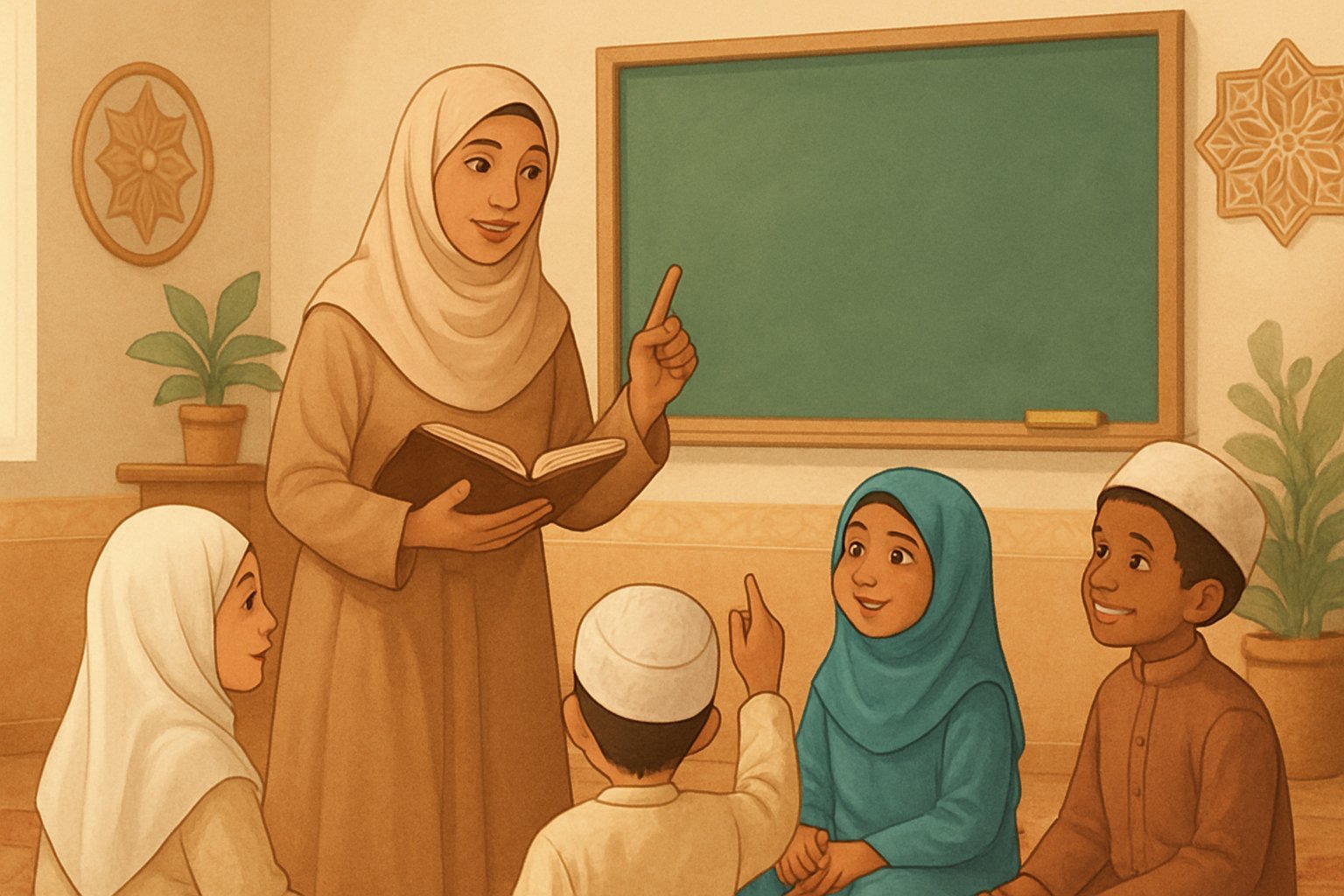
UK Quran Academy offers a structured six-week program where each week focuses on one kalima with proper pronunciation and meaningful understanding. The course adapts lessons for both children and adults while maintaining a supportive family environment throughout the learning journey.
Step-by-Step Weekly Lessons
The course follows a clear weekly structure that builds the islamic foundation systematically. Each week introduces one of the six kalimas with dedicated focus on pronunciation, meaning, and spiritual importance.
Week 1 covers Kalima Tayyibah with basic meanings and correct recitation practice. Students learn the fundamental declaration of faith through guided repetition and explanation.
Week 2 focuses on Kalima Shahadah, exploring faith in Allah and Prophethood. Teachers explain the deeper meanings while students practice perfect pronunciation.
Week 3 introduces Kalima Tamjeed with words of praise and glorification. The lesson includes understanding why these specific words matter in daily Islamic practice.
Week 4 teaches Kalima Tawheed, emphasizing the rejection of shirk and pure monotheism. Students learn both the Arabic text and its powerful meaning for Muslim belief.
Week 5 covers Kalima Istighfar for seeking Allah’s forgiveness. The class explains when and how to use this kalima in daily life.
Week 6 completes the course with Kalima Radd-e-Kufr, focusing on protecting one’s belief. Students finish with confidence in all kalimas and their proper recitation.
Tailored Learning for Kids and Elders
Children receive colorful visual aids, memory games, and gentle songs to make learning enjoyable. Teachers use posters and interactive activities that keep young minds engaged throughout each lesson.
Adult learners experience deeper discussions about meanings and practical applications. The course connects each kalima to Quranic verses and authentic Hadith for complete understanding.
For Kids:
- Visual learning tools and colorful materials
- Memory games and interactive activities
- Gentle encouragement and positive reinforcement
- Age-appropriate explanations of meanings
For Adults:
- Deep discussions about spiritual significance
- Connection to daily Islamic practice
- Group discussions and shared learning
- Historical and theological context
Both age groups receive the same quality Qiraat instruction. Teachers ensure every student develops beautiful, confident recitation regardless of their starting level.
Supportive, Family-Focused Environment
UK Quran Academy creates a warm learning atmosphere where families can learn together. Classes accommodate UK time zones and family schedules for maximum convenience.
Teachers provide individual attention to each student’s needs. They offer gentle corrections and encouragement to build confidence in reciting the kalimas correctly.
Small class sizes ensure everyone receives personal guidance. Students feel comfortable asking questions and practicing without pressure or judgment.
The academy awards certificates to students who successfully memorize and recite all six kalimas. This recognition celebrates their achievement and motivates continued Islamic learning.
Families often choose to enroll multiple generations together. This approach strengthens family bonds while building a solid islamic foundation for everyone involved.
Detailed Guide to Each Kalmah
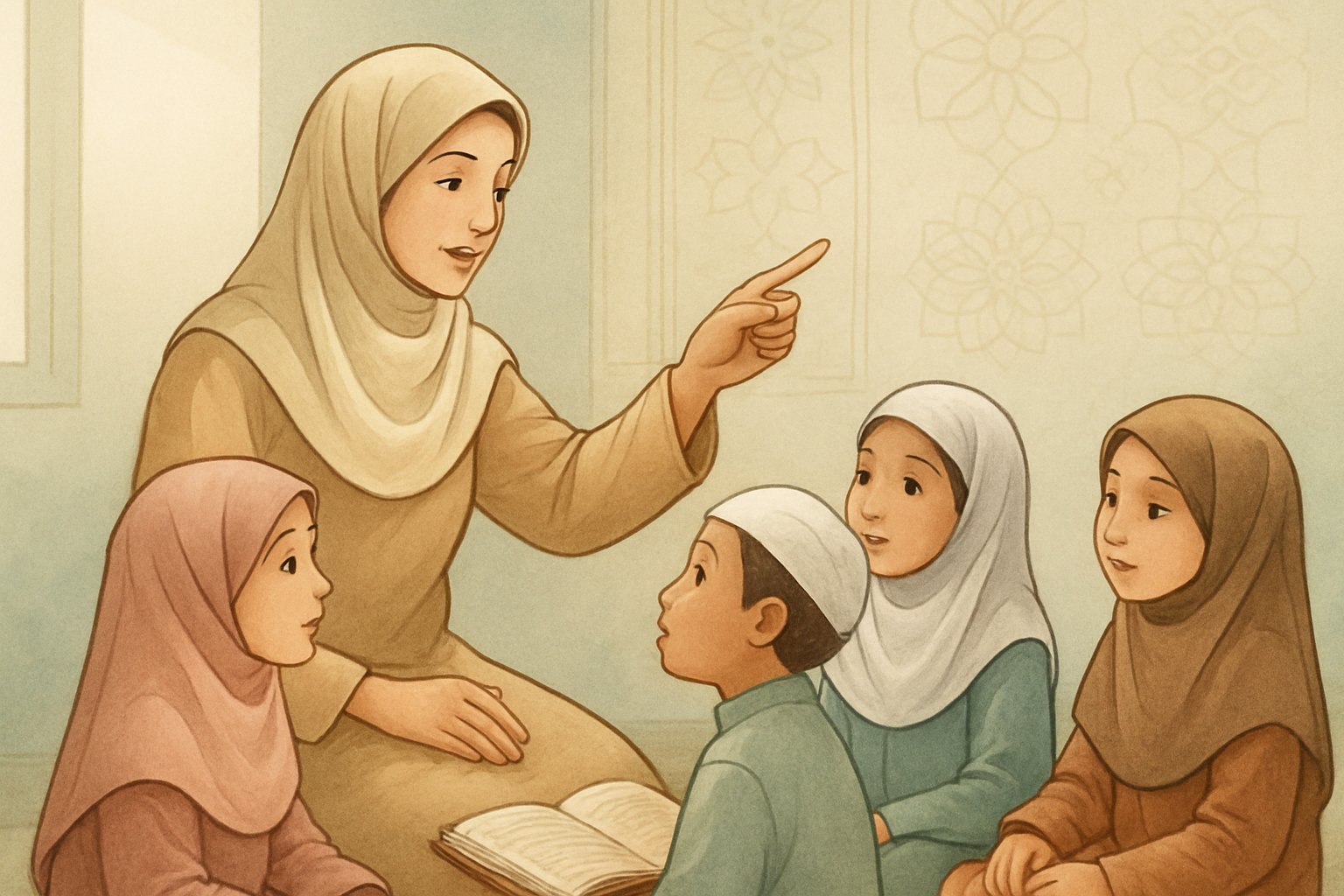
Each of the first four kalimas carries unique teachings that strengthen Islamic beliefs and connect families to Allah’s oneness. These declarations form the foundation of faith, with proper Qiraat helping both children and adults recite them with confidence and beauty.
First Kalmah: Tayyibah (Pure Declaration)
The First Kalmah serves as the most fundamental declaration in Islam. This pure statement affirms that there is no god worthy of worship except Allah, and Muhammad is His messenger.
Arabic Text: لَا إِلَهَ إِلَّا اللَّهُ مُحَمَّدٌ رَسُولُ اللَّهِ
English Translation: “There is no god worthy of worship except Allah, and Muhammad is the messenger of Allah.”
This kalmah represents the first pillar of Islam. When someone accepts Islam, they recite these exact words as their testimony of faith.
Children learn this kalmah first because it contains the core message of Islamic beliefs. The declaration of Allah’s oneness comes before everything else.
Adults find comfort in repeating this kalmah during difficult times. It reminds them that only Allah deserves worship and that Prophet Muhammad guides them on the right path.
UK Quran Academy teaches students to pronounce each Arabic letter correctly. Proper Qiraat ensures that “La ilaha illa Allah” flows beautifully from their tongues.
Second Kalmah: Shahadah (Testimony of Faith)
The Second Kalmah expands on the first declaration with additional testimony. Muslims recite parts of this kalmah during their daily prayers, making it essential for proper worship.
Arabic Text: أَشْهَدُ أَنْ لَا إِلَهَ إِلَّا اللَّهُ وَحْدَهُ لَا شَرِيكَ لَهُ وَأَشْهَدُ أَنَّ مُحَمَّدًا عَبْدُهُ وَرَسُولُهُ
English Translation: “I bear witness that there is no god worthy of worship except Allah, Who is alone and has no partner, and I bear witness that Muhammad is His servant and messenger.”
This testimony appears in the Tashahud portion of every prayer. Students who master this kalmah with proper Qiraat will pray with greater confidence.
The phrase emphasizes Allah’s oneness more strongly than the first kalmah. It clearly states that Allah has no partners or associates.
Families often notice their children sitting more attentively during prayers after learning this kalmah. The familiar words help them connect with the prayer experience.
Teachers at UK Quran Academy help students raise their index finger at the right moment during prayer practice. This gesture accompanies the testimony of Allah’s oneness.
Third Kalmah: Tamjeed (Words of Praise)
The Third Kalmah contains beautiful words of praise that Muslims use throughout their daily lives. These phrases appear in various forms of Islamic remembrance and worship.
Arabic Text: سُبْحَانَ اللَّهِ وَالْحَمْدُ لِلَّهِ وَلَا إِلَهَ إِلَّا اللَّهُ وَاللَّهُ أَكْبَرُ وَلَا حَوْلَ وَلَا قُوَّةَ إِلَّا بِاللَّهِ الْعَلِيِّ الْعَظِيمِ
English Translation: “Glory be to Allah, and all praise belongs to Allah, and there is no god worthy of worship except Allah, and Allah is the Greatest, and there is no power except with Allah, the Most High, the Most Great.”
This kalmah includes Subhanallah, Alhamdulillah, and Allahu Akbar. Muslims recite these phrases after their five daily prayers.
Many families teach their children to say these words before bedtime. The phrases bring peace and help kids feel close to Allah before sleep.
Adults use this kalmah during moments of stress or gratitude. Each phrase serves a different purpose in remembering Allah’s greatness.
The six kalimas work together to strengthen faith, and this third kalmah adds the element of constant praise. Students learn to appreciate Allah’s blessings through these words.
Fourth Kalmah: Tawheed (Oneness of Allah)
The Fourth Kalmah focuses entirely on Allah’s oneness and His complete authority over creation. This declaration teaches the most important concept in Islamic beliefs – Tawheed.
Arabic Text: لَا إِلَهَ إِلَّا اللَّهُ وَحْدَهُ لَا شَرِيكَ لَهُ لَهُ الْمُلْكُ وَلَهُ الْحَمْدُ يُحْيِي وَيُمِيتُ وَهُوَ عَلَى كُلِّ شَيْءٍ قَدِيرٌ
English Translation: “There is no god worthy of worship except Allah. He is alone and has no partner. To Him belongs all sovereignty and all praise. He gives life and causes death, and He has power over everything.”
A authentic hadith mentions special rewards for reciting this kalmah 100 times daily. The person receives blessings equal to freeing ten slaves and having 100 sins forgiven.
This kalmah lists several of Allah’s attributes in simple language. Children learn that Allah controls life, death, and everything in between.
The concept of Tawheed runs through all six kalimas, but this fourth declaration explains it most clearly. Students understand that Allah alone deserves worship and praise.
UK Quran Academy helps families memorize this longer kalmah through repetition and proper Qiraat practice. The rhythm of correct pronunciation makes memorization easier for all ages.
Embracing Repentance and Rejecting Disbelief
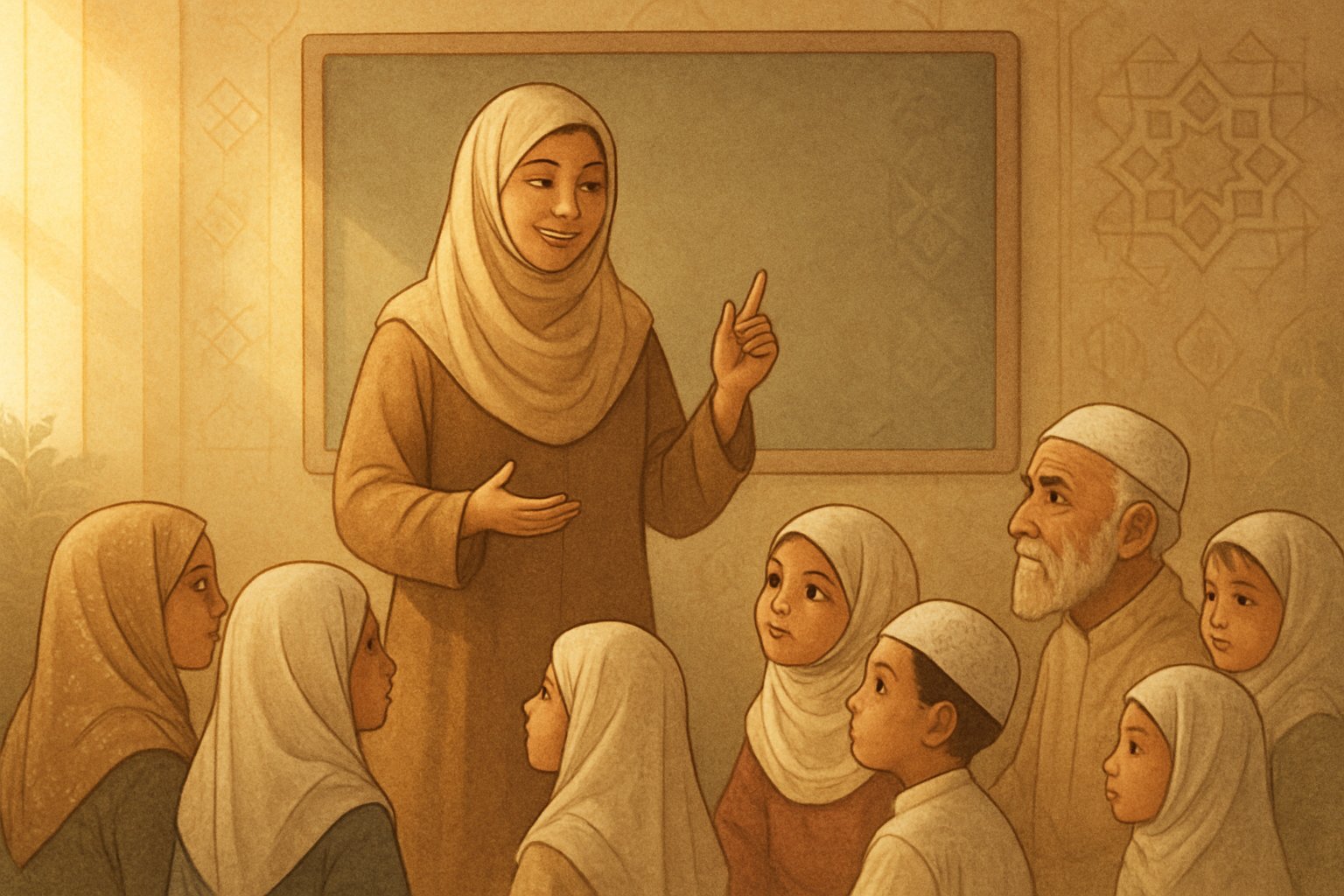
The fifth and sixth Kalmah teach Muslims to seek Allah’s forgiveness for their mistakes and protect themselves from shirk and kufr. These powerful declarations help believers maintain pure faith while turning away from anything that goes against Islamic teachings.
Fifth Kalmah: Istighfar (Seeking Forgiveness)
The fifth Kalmah focuses on asking Allah for forgiveness. This beautiful prayer helps both children and adults understand that everyone makes mistakes and Allah is always ready to forgive.
Key Benefits of Istighfar:
- Cleanses the heart from sins
- Brings peace to worried minds
- Strengthens the bond with Allah
- Opens doors to Allah’s mercy
At UK Quran Academy, teachers help students learn this Kalmah with proper Qiraat. Children enjoy learning through simple explanations about saying sorry to Allah. Elders dive deeper into understanding how regular repentance improves their daily spiritual life.
The fifth Kalmah teaches that Allah loves those who seek forgiveness. Students practice the correct pronunciation of each Arabic word. This helps them feel confident when making this important prayer.
Families find that learning Istighfar together creates a loving atmosphere at home. Parents and children can remind each other about seeking Allah’s forgiveness every day.
Sixth Kalmah: Radd-e-Kufr (Rejecting Disbelief and Shirk)
The sixth Kalmah protects Muslims from kufr (disbelief) and shirk (associating partners with Allah). This declaration helps believers stay away from anything that weakens their faith in one Allah.
What This Kalmah Rejects:
- Shirk in all its forms
- False beliefs and practices
- Actions that go against Islam
- Thoughts that weaken faith
UK Quran Academy teachers explain this Kalmah in age-appropriate ways. Children learn simple concepts about believing in only one Allah. Adults explore deeper meanings about avoiding modern forms of shirk in daily life.
The sixth Kalmah includes seeking Allah’s protection from both known and unknown sins. Students learn the proper Qiraat to recite each word correctly. This builds their confidence in rejecting disbelief completely.
This powerful declaration ends with affirming that there is no god but Allah and Muhammad is His messenger. Families appreciate how this Kalmah strengthens their Islamic identity together.
Qiraat: Perfecting Pronunciation and Tajweed
Learning proper tajweed rules and correct letter pronunciation helps students recite each Kalima with confidence and beauty. Mastering these skills ensures that every word of the 6 Kalimas sounds clear and accurate.
Tajweed Basics for Beginners
Tajweed means “to make beautiful” and refers to the rules that guide proper Quran recitation. At UK Quran Academy, students learn essential tajweed principles that apply directly to the 6 Kalimas.
Key Tajweed Rules for Kalima Recitation:
- Elongation (Madd): Stretching vowel sounds for the correct length
- Stopping Points (Waqf): Knowing where to pause naturally
- Clear Pronunciation: Making each letter distinct and crisp
- Rhythm and Flow: Maintaining steady pace without rushing
Teachers break down each Kalima word by word. They show students exactly how long to hold certain sounds. This step-by-step approach helps both children and adults feel confident.
Students practice with their teacher using repetition and gentle correction. The focus stays on building skills gradually rather than perfection from day one.
Makharij: Articulating Arabic Letters
Makharij refers to the exact places in the mouth and throat where Arabic letters originate. Learning correct makharij ensures that students pronounce every letter of the 6 Kalimas accurately.
Main Articulation Points:
| Letter Group | Articulation Point | Example Letters |
|---|---|---|
| Throat Letters | Deep throat | ح، خ، ع، غ |
| Tongue Letters | Various tongue positions | ت، د، ط، ذ |
| Lip Letters | Between the lips | ب، م، و |
Teachers at UK Quran Academy use visual aids and mirror practice to help students see proper mouth positioning. Children enjoy games that focus on different letter sounds.
Adult learners appreciate detailed explanations of how tongue placement affects pronunciation. Each lesson includes practice time where students repeat letters and receive immediate feedback.
Practice Methods Include:
- Individual letter drills
- Word-by-word Kalima practice
- Group recitation sessions
- Recording practice for self-review
Students develop muscle memory through consistent practice. This foundation supports beautiful Kalima recitation that the whole family can be proud of.
Practical Benefits and Everyday Application
Learning the 6 Kalimas with proper Qiraat creates a strong Islamic foundation that transforms daily life. This knowledge builds confidence in worship and strengthens Muslim identity for generations.
Building Lasting Islamic Identity
The 6 Kalimas serve as the cornerstone of a Muslim’s Islamic foundation. When families learn these sacred declarations together, they create shared spiritual experiences that last a lifetime.
Children who memorize the Kalimas develop a deep connection to their faith from an early age. They understand Allah’s oneness through the First Kalima and carry this belief into adulthood.
Daily Benefits Include:
- Stronger family bonds through shared learning
- Clear understanding of Islamic beliefs
- Pride in Muslim heritage and identity
- Protection from spiritual confusion
Adults find renewed purpose when they revisit these fundamental declarations. The Fifth Kalima (Astaghfar) becomes a daily tool for seeking forgiveness. The Sixth Kalima (Radd-e-Kufr) protects against doubts and negative influences.
Grandparents often become family teachers, passing down proper pronunciation to younger generations. This creates beautiful family traditions centered around Islamic values.
Confidence in Recitation and Worship
Proper Qiraat training removes fear and hesitation from Islamic worship. Students who learn correct pronunciation feel confident reciting the Kalimas in any setting.
Key Confidence Builders:
- Perfect Arabic pronunciation
- Understanding of meanings
- Ability to teach others
- Comfort in group prayers
Children gain self-esteem when they recite beautifully in front of family and friends. They become eager to participate in mosque activities and Islamic gatherings.
Adult learners overcome years of pronunciation anxiety. Many report feeling more connected during prayers and religious ceremonies. The structured approach at UK Quran Academy ensures every student masters each Kalima completely.
Teachers provide gentle correction and encouragement throughout the learning journey. Students practice in supportive environments where mistakes become learning opportunities rather than sources of embarrassment.
Leave A Comment