

Islamic Fiqh can sound intimidating at first, but it’s honestly one of the most down-to-earth areas of Islamic learning. Fiqh is all about understanding Islamic teachings deeply, so Muslims can worship Allah properly and navigate daily life with confidence.
The word “Fiqh” comes from an Arabic root meaning “to understand deeply.” In practice, it’s about applying Islamic law in real, everyday situations. That’s where it gets interesting.
The Quran actually encourages everyone to seek this kind of understanding. “Why do not a group from every section of them go forth to gain understanding in religion…” (Surah At-Tawbah 9:122). That’s a pretty clear nudge from above.
This verse highlights the value of practical faith. Whether you’re praying, fasting, running a business, or making family decisions, Fiqh offers guidance rooted in the Quran and Sunnah.
You don’t need to spend years in a seminary to benefit from Fiqh. Beginners can start with the basics and gradually build up, learning about worship, family, business, and daily conduct.
It’s the knowledge that helps you tell right from wrong, and makes your spiritual journey a whole lot clearer. The beauty of Fiqh is how accessible it is—it’s meant for every Muslim, no matter your background or education.
What Is Fiqh?
Fiqh is really just the practical side of Islamic law. It guides Muslims through worship and everyday decisions, turning Quranic guidance into clear steps for prayer, family, business, and personal behaviour.
Linguistic and Islamic Definitions
The word fiqh comes from the Arabic “fa-qa-ha,” meaning to really get something, to comprehend it fully. If you have fiqh of something, you know it inside out and can use it properly.
In Islamic terms, fiqh is Islamic jurisprudence—the science of understanding and applying Islamic law from the Quran and Sunnah. It’s the human effort to interpret divine guidance for real life.
Fiqh isn’t the same as Sharia. Sharia is the divine law itself, while fiqh is how scholars interpret and explain it for us.
Getting to this level of understanding takes deep study and careful thought. Scholars spend years with Arabic, the Quran, and hadith to develop reliable fiqh rulings.
The Role of Understanding in Islam
Allah highlights the importance of understanding religion throughout the Quran. “Why do not a group from every section of them go forth to gain understanding in religion” (Surah At-Tawbah 9:122) makes it clear—fiqh knowledge is a community duty.
Understanding helps prevent mistakes in worship and daily life. Without fiqh, you could end up praying wrong or making business decisions that don’t fit Islamic values.
The Prophet ﷺ said: “When Allah wishes good for a person, He gives him understanding (fiqh) of the religion” [Bukhari, Muslim]. That says a lot about its value.
Islamic jurisprudence helps sort out what’s required, recommended, allowed, disliked, or forbidden. It brings peace of mind and a sense of certainty.
Fiqh and the Everyday Life of a Muslim
Islamic law through fiqh touches every part of a Muslim’s day, from waking up to going to sleep. It’s a kind of constant companion, honestly.
Worship matters include how to do wudu, pray, fast in Ramadan, and pay zakat. Each act has its own rules to make sure it’s done right.
Family relationships are guided by fiqh—marriage, raising kids, looking after parents, inheritance. These rules help keep things fair and harmonious at home.
Business and money matters follow fiqh too: honest trade, avoiding interest, earning halal income. It’s about living your values at work, not just at home.
Even small choices—what to eat, how to dress, how to treat people—are covered. Fiqh is genuinely comprehensive, helping Muslims live according to Allah’s will in every situation.
Importance of Fiqh in Islam
The Qur’an keeps urging Muslims to seek knowledge and understanding. Fiqh takes those teachings and turns them into something you can live by—worship, family, business, all of it.
Qur’anic Emphasis on Gaining Religious Knowledge
The Qur’an puts a big emphasis on learning and understanding. Allah says: “Why do not a group from every section of them go forth to gain understanding in religion and warn their people when they return to them?” (9:122)
That verse makes it pretty clear: gaining religious understanding is a duty for the community. Not everyone has to be a scholar, but some people definitely should be.
The Qur’an also asks: “Are those who know equal to those who do not know?” (Surah Az-Zumar 39:9). It’s a rhetorical question, but the answer’s obvious.
In Surah An-Nahl, Allah says: “Ask the people of knowledge if you do not know” (16:43). So, if you’re stuck, go find someone who knows what they’re talking about.
Fiqh and Practical Application of Islam
Fiqh makes Islam workable, day to day. Without it, most people would be lost about how to worship or make the right choices.
Prayer is a good example—fiqh teaches the steps, the timing, what counts, what breaks it. It’s the difference between guessing and knowing.
Business dealings are guided by fiqh too. You learn what makes a sale valid, how to avoid interest, how to treat customers decently.
Family life gets clarity from fiqh—parents, spouses, everyone knows their rights and duties.
The Qur’an gives the principles, but fiqh fills in the details. The Qur’an commands prayer; fiqh teaches you exactly how to do it.
Connection Between Worship and Daily Life
Fiqh reminds us that Islam isn’t just about rituals. Every action, if done right, can be worship.
Eating becomes worship when you pick halal food and remember to say Bismillah. Working counts too, if you’re honest and fair.
The Prophet (peace be upon him) said: “When Allah wishes good for a person, He gives him understanding of the religion.” Fiqh knowledge is a real blessing.
Muslims who study fiqh start to see Allah’s guidance everywhere. Worship isn’t just in the mosque—it’s at home, at work, in the street.
This connection gives life more meaning. Your choices matter, and they shape your relationship with Allah.
Sources of Islamic Fiqh
Islamic law is built on four main sources, agreed upon by scholars for centuries. The Qur’an gives direct guidance from Allah, while the Sunnah shows how Prophet Muhammad ﷺ lived and taught those principles.
Qur’an: The Primary Source
The Qur’an is the top source for Islamic law. It’s Allah’s direct word, revealed to Prophet Muhammad ﷺ over 23 years.
Muslims believe the Qur’an is flawless and unchanged. Every rule in it is true and must be followed.
The Qur’an offers:
- Clear commands: Like “Establish prayer” (Surah Al-Baqarah 2:43)
- General principles: Broader teachings that scholars explain further
Some verses are about worship, others about family or business. There’s a lot of ground covered.
Allah says: “We have sent down to you the Book as clarification for all things” (Surah An-Nahl 16:89). So, the Qur’an really is a comprehensive guide.
Scholars dig deep into the Arabic and context of each verse to get the full meaning. They look at why and when each verse was revealed.
Sunnah and Hadith: Guidance from the Prophet ﷺ
The Sunnah is the way Prophet Muhammad ﷺ lived—what he said, did, and approved of. It’s basically the lived example of Islam.
Hadith are the written records of the Sunnah. Scholars collected thousands of these from people who knew the Prophet ﷺ personally.
The Qur’an says: “Whatever the Messenger gives you, take it. Whatever he forbids you from, leave it” (Surah Al-Hashr 59:7). That’s pretty direct.
The Sunnah explains the Qur’an in three ways:
| Type | Example |
|---|---|
| Confirms | Prophet ﷺ prayed five times daily as commanded |
| Explains | Shows exactly how to perform prayer |
| Adds details | Gives rules not mentioned in Qur’an |
Scholars check each hadith’s authenticity carefully. They look at who reported it and whether the chain of people is reliable.
The strongest hadith have multiple trustworthy sources. These are the backbone of Islamic law.
Ijma’ (Scholarly Consensus)
Ijma’ is when Islamic scholars all agree on a ruling, usually when the Qur’an and Sunnah don’t give a clear answer.
Prophet Muhammad ﷺ said: “My community will never agree upon an error” [Abu Dawood]. So, consensus counts for a lot.
Ijma’ can work in a few ways:
- All scholars in a certain era agree
- Early generations reach a consensus
- Later scholars accept an earlier agreement
For example, scholars agreed that grandparents can inherit, even though the Qur’an doesn’t mention it directly.
This consensus has to be rooted in the Qur’an and Sunnah—scholars can’t just make things up. Ijma’ gives Muslims confidence in new situations and shows the community working together for solutions.
Qiyas (Analogical Reasoning)
Qiyas is basically comparing a new situation to something that’s already been addressed in the Qur’an or Sunnah. Scholars turn to this method when there isn’t a direct answer available for a new issue.
This approach looks for the same underlying reason or wisdom in two different situations. If the cause is the same, the ruling usually follows suit.
The process comes down to four steps:
- Original case: Something clearly covered in Qur’an or Sunnah
- New case: The situation that needs a ruling
- Common reason: The shared cause or wisdom
- Ruling: Applying the same law to both cases
Take the example of wine. The Qur’an forbids it because it intoxicates. Through qiyas, scholars extend that ruling to all intoxicating drinks.
Only qualified scholars are allowed to use qiyas. They need a strong grasp of Arabic, deep knowledge of the Qur’an and Sunnah, and have to stick to strict scholarly rules.
Qiyas keeps Islamic law alive and relevant, linking new challenges to the timeless principles from Allah and His Messenger ﷺ.
Benefits and Virtues of Learning Fiqh

Learning fiqh isn’t just about rules—it’s about drawing closer to Allah and finding practical help for everyday life. It gives Muslims the tools to know what’s halal and haram, building confidence in worship and daily choices.
Spiritual and Practical Rewards
The Prophet Muhammad (peace be upon him) said: “When Allah wishes good for a person, He gives him understanding (fiqh) of the religion.” That really says it all, doesn’t it?
There’s something special about seeking fiqh. The hadith also says: “Whoever travels a path seeking knowledge, Allah makes his path to Paradise easy.” It’s a beautiful encouragement.
Fiqh even shields against Satan’s tricks. The Prophet (peace be upon him) taught: “A single jurist is more difficult for Shaytan than a thousand worshippers.” So, knowledge really is a kind of armour.
As Muslims learn fiqh, they naturally get closer to Allah and gain a deeper understanding of their faith.
Guidance in Halal and Haram
Fiqh is the map for what’s allowed and what’s forbidden. It’s what helps Muslims navigate daily decisions with a bit more certainty.
Without it, mistakes happen. People might eat something haram or get into dodgy business deals without realising. Fiqh helps avoid those slip-ups.
Key areas where fiqh provides guidance:
- Food and drink
- Business and money
- Family relationships
- Social life
- Personal habits
Knowing fiqh gives peace of mind. Muslims can feel reassured their choices are pleasing to Allah.
Empowerment in Worship and Conduct
Fiqh makes worship (ibadah) feel less intimidating and more meaningful. Muslims can learn the right way to pray, fast, and give charity.
When you know the rules of prayer, you can focus on connecting with Allah instead of worrying about mistakes. That’s a huge relief for many people.
Fiqh also shapes how Muslims treat family, neighbours, and business partners. It defines rights and responsibilities in a clear way.
Benefits for daily worship:
- Correct prayer steps
- Proper fasting guidance
- Understanding charity
- Knowledge of pilgrimage basics
This kind of knowledge just makes life smoother and boosts confidence, honestly.
Main Areas of Islamic Fiqh
Islamic Fiqh focuses on the core acts of worship (ibadah) that every Muslim needs. These include keeping clean, praying properly, fasting in Ramadan, and giving charity.
Rulings on Purification (Taharah)
Purification is the starting point for all worship. Muslims need to know the basics of ritual cleanliness before anything else.
Wudu (Ablution) is a must before each prayer. It means washing the face, arms, wiping the head, and washing the feet. The Quran says: “O you who believe! When you rise up for prayer, wash your faces and your hands up to the elbows” (5:6).
Ghusl (Full Body Washing) is required after certain situations—like after marital relations or menstruation. The whole body needs to be washed with clean water.
Tayammum (Dry Ablution) is an alternative when water isn’t available or safe to use. Muslims use clean earth or dust, touching it with their hands and wiping their face and hands.
Knowing what breaks wudu is important. Things like using the toilet, passing gas, deep sleep, or direct contact with private parts all break wudu.
Prayer (Salah)
Prayer is the backbone of Islamic practice after faith itself. Muslims pray five times a day at set times.
The Five Daily Prayers are:
- Fajr (Dawn) – 2 units
- Dhuhr (Midday) – 4 units
- Asr (Afternoon) – 4 units
- Maghrib (Sunset) – 3 units
- Isha (Night) – 4 units
Each prayer has its own requirements. Muslims must face the Qibla (towards Mecca), stand in lines if in a group, and recite specific verses.
Prayer Requirements include being clean, dressing modestly, praying at the right time, and facing the correct direction. There are slight differences for men and women in how much of the body to cover.
The Prophet (peace be upon him) said: “Pray as you have seen me pray” (Bukhari). That’s the gold standard for learning salah.
Fasting (Sawm)
Fasting in Ramadan is a pillar of Islam. Muslims avoid food, drink, and marital relations from dawn to sunset.
Who Must Fast? All adult Muslims who are mentally and physically able. Kids, pregnant women, travellers, and those who are ill are generally excused.
What Breaks the Fast? Eating, drinking, smoking, marital relations, and vomiting on purpose. Forgetting and eating by accident doesn’t count.
Suhur and Iftar make fasting manageable. Suhur is the early morning meal, and iftar is when you break your fast at sunset.
It’s not just about food—fasting also means avoiding bad behaviour, arguments, and lying. The Quran says: “Fasting is prescribed for you as it was prescribed for those before you, that you may become righteous” (2:183).
Zakah and Charity
Zakah is the third pillar—obligatory charity for those who meet the requirements.
Nisab is the minimum wealth you need before zakah is due. You have to own it for a full lunar year. Usually, zakah is 2.5% of savings and certain assets.
Types of Wealth Subject to Zakah include:
- Cash and savings
- Gold and silver
- Business stock
- Livestock (with specific numbers)
- Agricultural produce
Who Receives Zakah is clearly listed in the Quran. The eight categories are: the poor, needy, zakah collectors, new Muslims, freeing slaves, debtors, those striving in Allah’s way, and travellers in need.
Zakah is different from sadaqah (voluntary charity). Zakah is obligatory and has rules. Sadaqah can be given to anyone, anytime, in any amount. Both purify wealth and support the community, but zakah is a duty.
Fiqh of Hajj and Pilgrimage
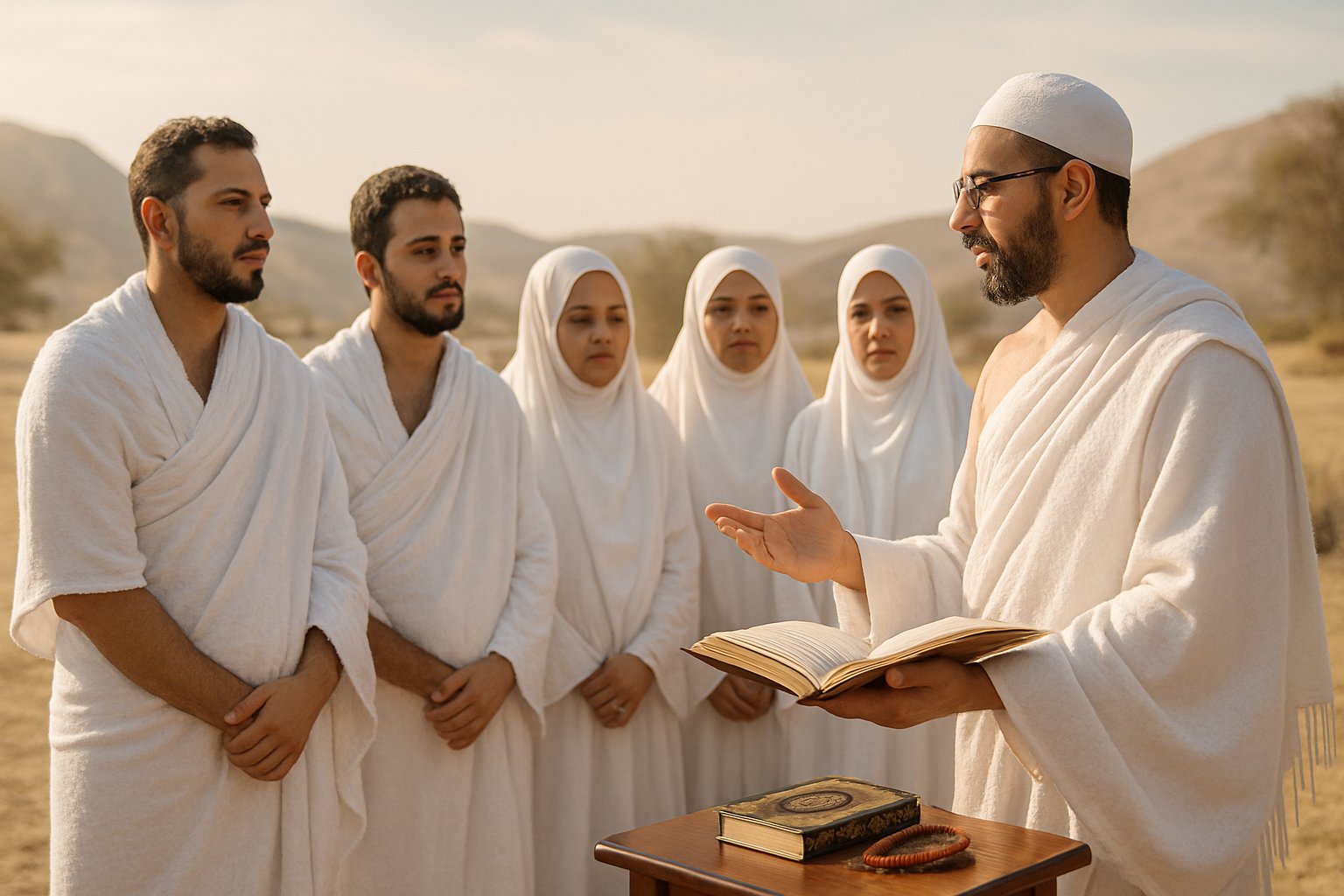
The hajj pilgrimage is one of Islam’s five pillars. It takes some know-how to get it right—there are key acts to complete, conditions to meet, and common mistakes to avoid.
Obligatory Acts of Hajj
Hajj has certain acts that are absolutely essential. These pillars form the backbone of the whole journey.
The Four Main Pillars:
- Ihram – Entering the sacred state at the boundary points
- Standing at Arafat – Gathering on the plain of Arafat on the 9th of Dhul-Hijjah
- Tawaf al-Ifadah – Circling the Kaaba seven times after Arafat
- Sa’i – Walking seven times between Safa and Marwah hills
Pilgrims also do the ritual stoning of three pillars in Mina, symbolising the rejection of Satan’s temptations.
The farewell tawaf is the last act before leaving Mecca. Women who are menstruating are excused from this.
If any of these pillars are missed, the hajj just isn’t complete. You can’t swap these acts out for something else or pay your way through.
Conditions and Requirements
Islamic law spells out who must perform hajj and when. These rules protect pilgrims and make sure the journey is doable.
Essential Prerequisites:
- Muslim – Only Muslims can do hajj
- Adult and sane – Kids and those who are mentally unwell aren’t required
- Physically able – You need to be healthy enough for the trip
- Financially capable – You should be able to afford it without harming your family
- Safe passage – The route must be safe
Women have extra requirements for safety—they need a mahram (a close male relative or husband) to travel with them.
The financial requirement means not leaving your family in hardship. Don’t borrow money for hajj if it’ll cause problems at home.
If someone is physically unable to perform the key acts, they’re excused. They can even have someone else do hajj for them if they want.
Common Mistakes to Avoid
Every year, pilgrims make mistakes that complicate their hajj or even affect its validity. Honestly, some of these slip-ups are avoidable if you know what to watch for.
Ihram Violations:
- Wearing sewn clothing for men
- Using scented soaps or perfumes
- Cutting hair or nails
- Hunting or killing animals
There’s a common misconception that ihram just means the white garments men wear. In reality, ihram is a sacred state that starts with intention and saying the talbiyah, not just a dress code.
Timing Errors:
Arriving at Arafat after sunset on the 9th invalidates the hajj. Pilgrims really need to plan ahead and aim to reach Arafat well before the deadline.
Another issue is rushing through tawaf or sa’i without completing the right number of circuits. Each lap has its own starting and ending point, so it’s worth double-checking as you go.
Performing rituals out of order is surprisingly common. Sticking to the right sequence helps you avoid penalties and keeps your hajj on track.
Ritual Mistakes:
- Throwing large rocks instead of small pebbles at the pillars
- Delegating stoning to others without a valid excuse
- Skipping the overnight stay in Mina on required nights
Islamic Schools of Fiqh (Madhabs)
The four main madhabs formed as early Muslim scholars developed systematic ways to interpret Islamic law. Each school sticks to the same foundational sources—the Qur’an and Sunnah—but their methods sometimes lead to different rulings.
Origins of the Four Madhabs
The earliest madhabs appeared during Islam’s second and third centuries. Scholars saw a need to organise religious knowledge so it wouldn’t get lost.
Each school is named after its founder, a scholar renowned for deep insight into the Qur’an and Sunnah. It’s hard not to admire their dedication.
The Hanafi school was started by Imam Abu Hanifa (699–767 CE) in Iraq. It’s now the most widely followed madhab in the world.
The Maliki school traces back to Imam Malik (711–795 CE) in Medina. He put special emphasis on the traditions of the people of Medina.
The Shafi’i school was established by Imam al-Shafi’i (767–820 CE). He’s credited with formalising the science of Islamic jurisprudence.
The Hanbali school was founded by Imam Ahmad ibn Hanbal (780–855 CE) in Baghdad. This school is known for prioritising strict adherence to the Qur’an and hadith.
Overview: Hanafi, Maliki, Shafi’i, Hanbali
| Madhab | Founder | Main Regions | Key Features |
|---|---|---|---|
| Hanafi | Abu Hanifa | Turkey, Pakistan, India | Uses reasoning and analogy |
| Maliki | Malik ibn Anas | North/West Africa | Emphasises Medina practices |
| Shafi’i | Muhammad al-Shafi’i | Southeast Asia, Egypt | Systematic methodology |
| Hanbali | Ahmad ibn Hanbal | Saudi Arabia, Gulf | Conservative interpretation |
The Hanafi madhab is popular for its flexibility and use of reasoning when the sources aren’t crystal clear.
The Maliki madhab holds the customs of Medina in high regard. Imam Malik felt the people of Medina best preserved the Prophet’s way.
The Shafi’i madhab is known for its balanced, methodical approach to legal reasoning. It’s the school that formalised how scholars derive rulings.
The Hanbali madhab is the strictest when it comes to sticking to the Qur’an and authentic hadith. It’s also the official school in Saudi Arabia now.
All four madhabs are respected and valid. Muslims can confidently follow any of them and still practise their faith soundly.
Why Rulings May Differ
Ever wondered why madhabs sometimes disagree? Their methods of interpretation just aren’t identical.
One factor is how each school weighs the strength of hadith. What’s strong for one might not make the cut for another.
The use of reasoning also varies. The Hanafis lean more on logic, while the Hanbalis tend to avoid it unless absolutely necessary.
Local customs shaped things too. Early scholars took their communities’ practices into account, which coloured some rulings.
And then there’s language—Arabic words can carry more than one meaning, so interpretations shift.
These differences aren’t a problem; they actually highlight the depth of Islamic scholarship. If anything, it’s a mercy and a sign of flexibility in the tradition.
Key Terms and Concepts in Fiqh
To get a handle on Fiqh, you need to know a few key terms. These words help Muslims figure out what’s required, what’s recommended, and what’s off-limits.
Wajib, Fard, Sunnah, and Mustahabb Explained
Wajib and Fard both mean something is absolutely obligatory. If you skip a fard act, there are serious consequences—like missing one of the five daily prayers.
Wajib is also required, but it’s a notch below fard. If you miss a wajib act, you need to make it up, but your worship isn’t automatically invalid.
Sunnah covers recommended actions based on the Prophet Muhammad’s example. There’s reward for doing them, but you’re not sinful if you leave them out.
For instance, praying before Fajr is a sunnah. Following these practices is a way to show love for the Prophet’s tradition.
Mustahabb describes actions that are encouraged and bring blessing, like giving extra charity or doing additional dhikr.
Understanding these categories helps Muslims prioritise. Obligations come first—everything else is a bonus.
Halal and Haram: Legal Classifications
Halal simply means allowed. Most foods and actions fall under halal, unless there’s a clear reason they shouldn’t.
Eating vegetables, working honestly, and helping neighbours are all halal—easy wins, really.
Haram is the opposite—strictly forbidden. These are things that harm you or society, like drinking alcohol or charging interest.
Some things are makruh—disliked but not forbidden. Wasting food or water is a classic example. You get rewarded for avoiding makruh acts.
Mubah means something’s neutral—neither rewarded nor sinful. Choosing what to wear or what to eat (as long as it’s halal) falls here.
This whole system helps Muslims navigate daily life, making it easier to please Allah and steer clear of trouble.
Role of Ijtihad in Modern Contexts
Ijtihad is when scholars use their training to figure out rulings for new or complex situations. It’s especially handy when you’re dealing with stuff the early scholars never imagined—think online banking or social media.
Not everyone can do ijtihad; it takes deep knowledge and years of study. Only qualified jurists are supposed to take on this responsibility.
Sometimes, scholars reach different conclusions through ijtihad. That’s normal, really—it shows the law can adapt while sticking to its principles.
Modern issues like medical ethics or environmental questions need fresh ijtihad. Scholars look at these topics through an Islamic lens, balancing tradition with new realities.
As long as ijtihad stays true to the Qur’an and authentic Sunnah, it keeps Islamic law relevant—without losing its heart.
Studying Fiqh Today

These days, learning Islamic Fiqh is more accessible than ever. Students can dive into authentic knowledge rooted in the Qur’an and Sunnah—without feeling overwhelmed.
Qur’an-and-Sunnah-Based Learning Approaches
Modern Fiqh courses start with the basics: Qur’an and authentic Hadith. Before getting into the details, students build a solid foundation.
Instead of rote memorisation, today’s teachers explain the wisdom behind rulings. They connect lessons to real-life situations, which makes everything click a bit more.
Progressive learning structures help beginners tackle essential topics in order—starting with purification and prayer, then moving to things like finance and family law.
Qualified instructors walk students through the process of how rulings are derived. Understanding the “why” behind the law really deepens respect for the tradition.
Interactive discussions are encouraged. Students can ask questions, and teachers address modern challenges while sticking to core principles.
Accessible Resources for Beginners
There’s honestly never been a better time to start. Online platforms offer flexible courses that fit around busy lives.
Digital libraries have translations of classical Fiqh texts, plus modern explanations. You can access resources from anywhere—no need to travel or wait for books to arrive.
Video lectures and interactive sessions are a lifesaver for visual and auditory learners. Expert teachers break things down into bite-sized pieces.
Mobile apps provide quick answers to common Fiqh questions. They’re handy for those “what do I do now?” moments during daily life.
Multilingual resources help students learn in their preferred language, while slowly building up Arabic vocabulary. It takes the pressure off.
Study groups and online forums make learning less lonely. Peers can share tips, answer questions, and keep each other motivated.
If you’re based in the UK and want structured, reliable Fiqh education, check out UK Quran Academy. Their courses are tailored for beginners and taught by qualified instructors, making it easy to start your learning journey right here at home.
The UK Quran Academy’s Commitment to Fiqh Education
UK Quran Academy offers a thorough Islamic Fiqh education, designed especially for students all over the United Kingdom. Their approach blends traditional scholarship with teaching that actually makes sense for today’s world.
Their programs are open to learners of every age and background, whether you’re just starting out or looking to go deeper. There’s a real effort to make everyone feel welcome.
Qualified instructors lead the courses, each with proper credentials and a solid understanding of both classical sources and how Fiqh fits in our lives now. These aren’t just teachers—they’re scholars who get what it’s like to be Muslim in the UK today.
Students benefit from guidance that’s rooted in experience and empathy. It’s not just about memorising rules—it’s about understanding how to live them.
The academy’s structured curriculum starts with essentials like purification and prayer. Once you’ve got the basics, you move on to more advanced topics, step by step.
This way, nobody’s thrown in at the deep end. There’s a real sense of building knowledge layer by layer, which just feels right.
Flexible scheduling is a big part of what they offer. Whether you’re a working professional, a busy parent, or a student yourself, you can fit learning around your life.
Online classes mean you can join from home, so there’s no need to travel or disrupt your routine. That’s a relief, honestly.
You’ll find the academy is grounded in authentic, Qur’an-and-Sunnah-based teaching. There’s a genuine passion for developing confident, knowledgeable Muslims—people who can carry Fiqh into modern British life with real understanding.
Family-friendly programs are available too. Parents and children can learn together, which is a lovely way to strengthen Islamic education at home and across the UK.

Curious? You can find out more or sign up for a class at the UK Quran Academy website.
Leave A Comment