


The importance of Hifz goes way beyond just memorising—it’s one of Islam’s most cherished traditions. It’s about preserving the Quran through memory, a practice that’s kept the holy text safe for over 1,400 years and still shapes Muslim lives across the UK.
Hifz is the complete memorisation of the Quran. It’s a journey that’s both spiritual and practical, and it brings transformation in unexpected ways.
Understanding why Hifz matters helps Muslims see how this ancient practice tightens their spiritual bond with Allah. It also helps with mental sharpness and personal discipline.
Those who finish Hifz—Hafiz or Hafiza—don’t just earn religious honour. They gain sharper memory, a deeper grip on Islamic teachings, and a source of comfort that sticks for life.
Let’s dig into what Hifz means for Muslims in the UK. We’ll look at its religious weight, the personal benefits, and some practical ways to succeed. If you’re thinking about starting your Hifz journey or helping a loved one, it’s good to know what you’re getting into.
Definition and Background
Hifz comes from the Arabic for “to preserve” or “to protect.” It’s the act of memorising the whole Quran, word for word. This tradition began with Prophet Muhammad (peace be upon him) and his companions. They memorised the revelations as they came, making sure the Quran survived in both writing and memory.
The practice of Hifz is a living sign of Allah’s promise in Surah Al-Hijr: “Indeed, it is We who sent down the Quran and indeed, We will be its guardian.” Through millions of Huffaz, this protection is still alive. UK Quran Academy takes this responsibility seriously, offering structured programmes that respect tradition but fit modern British Muslim families.
Hifz isn’t just reading or casual study. It’s memorising all 114 chapters and over 6,000 verses—plus learning proper pronunciation with tajweed. It’s a tough process, usually taking two to five years, depending on the student’s age and dedication.
Importance and Benefits
Spiritual Rewards and Connection
The importance of Hifz is obvious when you look at its spiritual benefits. Memorising the Quran brings you closer to Allah’s words, literally carrying them in your heart. The Prophet Muhammad (peace be upon him) said: “The best among you are those who learn the Quran and teach it.” That’s a pretty clear endorsement.
Huffaz get some unique spiritual perks:
- They can recall verses during prayer and reflection, anytime, anywhere.
- They’re able to lead prayers with confidence.
- The Quran will intercede for them on the Day of Judgement.
- They earn special respect in the Muslim community.
Cognitive and Mental Benefits
Modern research backs up what Muslims have known for centuries: Hifz is great for the mind. Regular memorisation boosts mental abilities in real, practical ways.
Enhanced Memory Function: The discipline of memorising the Quran gives students memory techniques they can use in school, work, and life.
Improved Concentration: Focused memorisation trains the brain to concentrate for longer stretches. That skill comes in handy pretty much everywhere.
Mental Discipline: It takes daily practice and real commitment to finish Hifz. Students build self-discipline that sticks with them for years.
Personal and Character Development
Hifz isn’t just about the mind. The journey builds patience, humility, and confidence. Students learn to rely on Allah, work through setbacks, and celebrate milestones. At UK Quran Academy, we see these changes every day—students grow into more well-rounded, resilient people.
Step-by-Step Learning Approach
Setting Foundation
Getting ready for Hifz means setting realistic goals. UK Quran Academy suggests students first learn basic Arabic reading and tajweed before memorising. Start strong, and you’ll save yourself headaches later on.
Assessment and Planning:
- Check your current Quran reading skills.
- Figure out how much time you can study daily.
- Set a timeline that makes sense for you.
- Pick a learning environment that helps you focus.
Daily Memorisation Routine
Consistency is everything. Hifz works best when you have a set routine with a clear method.
Morning Session (New Memorisation):
- Start after Fajr—your mind’s fresh.
- Work on new verses for 45-60 minutes.
- Use repetition and rhythm to lock it in.
- Track your progress in a notebook.
Evening Session (Revision):
- Review what you’ve memorised before.
- Repeat regularly to keep it sharp.
- Spot and fix mistakes early.
- Practice reciting with proper tajweed.
Progressive Building Method
UK Quran Academy uses a step-by-step approach that builds your memorisation gradually:
Week 1-4: Nail down the first verses with total accuracy.
Month 2-3: Move on to complete short surahs.
Month 4-6: Tackle medium-length chapters.
Year 1-2: Work through longer surahs, bit by bit.
Final Phase: Revise everything and get certified.
This way, you don’t get overwhelmed. You build confidence and retention as you go.
Regular Assessment and Correction
Regular check-ins stop mistakes from sticking. Weekly assessments with experienced teachers help catch errors in pronunciation or missed words. UK Quran Academy offers feedback sessions to keep you on track, so you don’t drift off course.
Common Mistakes and How to Avoid Them
Rushing Through Memorisation
Lots of students try to go too fast, but Hifz is a marathon, not a sprint. Trying to memorise too much at once usually leads to forgetting and frustration. UK Quran Academy encourages focusing on quality—get each section right before moving on.
Prevention Strategies:
- Set goals you can actually hit each day.
- Take more time with harder passages.
- Accuracy beats quantity, every time.
- Keep revising so you don’t forget.
Neglecting Tajweed Rules
Skipping tajweed is a mistake that’s hard to fix down the line. You need to learn proper pronunciation as you go, not after.
Solution Approaches:
- Study with a qualified tajweed instructor.
- Listen to audio from expert reciters.
- Practice—lots of it.
What Is Hifz?

Hifz is the sacred practice of memorising the entire Holy Quran in Arabic. It’s a living tradition that’s been going strong for over 1,400 years.
Meaning of Hifz in Islam
Hifz means “to preserve” or “to guard” in Arabic. In Islam, it’s about memorising the Quran completely, in its original form.
Someone who finishes this journey is called a Hafiz (male) or Hafiza (female). These people are held in high regard everywhere.
Memorising the Quran means all 114 chapters—about 6,236 verses—with perfect accuracy.
Why do it? In Islam, Hifz serves several purposes:
- Preservation: It protects the sacred text from being lost or changed.
- Spiritual connection: It brings you closer to Allah’s words.
- Community leadership: Hafiz individuals often lead prayers and teach others.
- Personal development: It builds discipline, patience, and mental strength.
The Quran itself promises: “Indeed, it is We who sent down the Quran and indeed, We will be its guardian.” (15:9)
Historical Background of Quran Memorisation
The tradition of memorising the Quran started in the time of Prophet Muhammad (PBUH), over 1,400 years ago. He memorised each revelation and taught his companions to do the same.
Many of his companions became full memorizers of the Quran. They were vital in keeping the text safe before it was ever written down.
Key historical milestones:
- 610-632 CE: Prophet Muhammad and his companions memorise the revelations.
- 632 CE: Abu Bakr orders the Quran to be compiled in writing.
- 650 CE: Uthman standardises the written copies.
- Present day: Millions of Muslims keep the tradition alive.
The oral tradition has stayed unbroken. Teachers pass on the exact pronunciation and recitation to students, face-to-face.
This method keeps the Quran safe in its original form. Even if every written copy vanished, the memories of Huffaz would keep it alive.
Religious Significance of Hifz

Hifz carries deep religious meaning. Those who memorise the Holy Quran earn the respected title of hafiz and receive special spiritual rewards. It’s a direct connection to Allah and promises a higher status in the hereafter.
But how do you actually get there? That’s where UK Quran Academy comes in. We help you memorise the Quran with a step-by-step, personalised approach. Our expert teachers and scholars guide you through every stage, making sure you understand and remember what you learn. We’re not just about memorisation—we want you to truly connect with the Quran, inside and out.
At UK Quran Academy, we know every student is different. Some need more time, some need more encouragement. Our teachers are patient, knowledgeable, and genuinely want to see you succeed. If you’re serious about Hifz, or even just curious, we’re here to help you start, keep going, and reach your goal.
Hafiz in Islamic Tradition
A hafiz in Islam stands as one of the most honoured achievements in the Muslim community. The word comes from the Arabic root meaning “to guard” or “to preserve.”
Those who complete Quran memorisation become living guardians of Allah’s word. They carry the entire Holy Quran within their hearts and minds.
The Prophet Muhammad (peace be upon him) said: “The best among you are those who learn the Quran and teach it.” That hadith really highlights the high status of a hafiz.
Traditional roles of a hafiz include:
- Leading prayers in mosques
- Teaching Quran recitation to others
- Preserving the text through oral tradition
- Serving as religious scholars
Muslim communities around the world show deep respect for hafiz members. They’re often invited to recite at weddings and religious gatherings.
This tradition goes all the way back to the Prophet’s companions, who memorised revelations as they were received. Oral preservation has protected the Quran for over 1,400 years—pretty incredible if you think about it.
Spiritual Rewards for Quran Memorisation
The benefits of being a hafiz go way beyond public recognition. Islamic teachings promise immense spiritual rewards for those who memorise Allah’s words.
The Quran states in Surah Fatir: “Those who recite the Book of Allah and establish prayer… hope for a transaction that will never perish.” That ayat speaks volumes about the eternal rewards for hafiz individuals.
Key spiritual benefits include:
- Direct connection with Allah through constant engagement with His words
- Protection from sins—the Quran acts as a spiritual shield
- Increased faith from daily interaction with divine guidance
- Inner peace from regular recitation and reflection
The Prophet (peace be upon him) taught that each letter of the Quran brings ten rewards when recited. For a hafiz who reviews regularly, those rewards just keep multiplying.
Memorising the Holy Quran also brings barakah (blessings) to one’s family. Islamic tradition says parents of a hafiz get special honour on the Day of Judgement.
Elevated Status in the Hereafter
Islamic teachings describe remarkable rewards awaiting hafiz individuals in Paradise. These promises motivate millions of Muslims to pursue Quran memorisation.
The Prophet (peace be upon him) said: “The one who was devoted to the Quran will be told on the Day of Resurrection: ‘Recite and ascend.'” That hadith reveals that hafiz members will climb higher levels in Paradise.
Afterlife rewards for hafiz include:
- Intercession rights for family members on Judgement Day
- Crown of honour placed upon parents’ heads in Paradise
- Elevated ranks corresponding to the last ayat memorised
- Special recognition before Allah and all creation
The memoriser’s parents receive a crown brighter than the sun. This reward extends the benefits of being a hafiz to entire families.
Islamic scholars explain that each ayat memorised creates a step towards higher Paradise levels. Those who complete the full Quran reach the highest possible ranks.
UK Quran Academy puts a big emphasis on these spiritual rewards. When we teach students about the importance of hifz, we talk about the lasting impact on one’s eternal life.
Personal and Cognitive Benefits
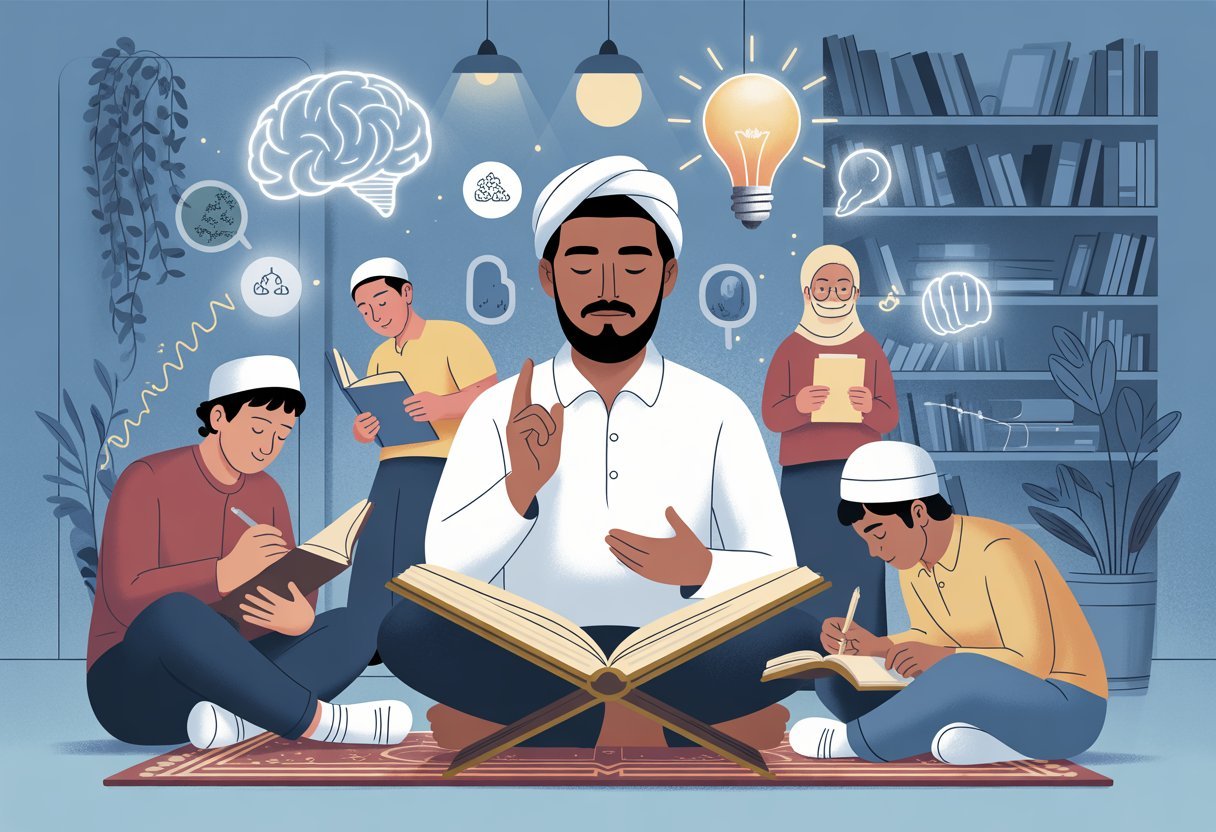
Memorising the Quran brings real improvements to mental function and emotional wellbeing. Students often notice sharper memory, better focus, and stronger cognitive skills that stick with them for life.
Improved Memory and Focus
Quran memorisation is like a workout for your brain. The repetitive recitation creates new neural connections and strengthens memory pathways.
Students who engage in hifz develop superior memory retention abilities. They can recall information more quickly and accurately than before starting their memorisation journey.
Key memory improvements include:
- Enhanced short-term memory capacity
- Better long-term information storage
- Faster recall of learned material
- Improved ability to memorise other subjects
The concentration required for memorising verses trains the mind to maintain focus for longer stretches. Students learn to block out distractions and really stay present with their studies.
Regular practice sessions develop sustained attention skills. These abilities transfer to academic work, professional tasks, and daily activities requiring mental focus.
Enhanced Cognitive Skills
Memorising the Quran isn’t just about memory. It helps develop analytical thinking and problem-solving skills too.
Cognitive benefits include:
- Pattern recognition—spotting verse structures and connections
- Language processing—grasping Arabic grammar and vocabulary
- Sequential thinking—organising chapters and verses logically
- Mental flexibility—switching between recitation styles
Students get better at organising their time and structuring their memorisation schedule. Balancing hifz with other responsibilities teaches real-world time management.
The mental discipline required builds perseverance and determination. Students gain confidence in tackling challenging academic or professional goals.
Research shows that regular Quran recitation activates multiple brain regions simultaneously. This cross-brain activity boosts overall mental agility.
Emotional and Mental Wellbeing
Hifz students often notice big improvements in emotional stability and mental health. The spiritual connection with Quranic verses provides comfort, especially during tough times.
Regular recitation reduces stress and brings inner peace. Many students say they feel calmer and more emotionally balanced after a good practice session.
Mental health benefits include:
- Reduced anxiety and worry
- Improved emotional regulation
- Greater sense of purpose and meaning
- Enhanced self-confidence and self-esteem
Memorising new sections builds pride and a sense of accomplishment. Overcoming memorisation challenges helps students develop resilience.
Connecting with Quranic teachings gives real-life guidance. Students gain wisdom and perspective that helps them navigate personal and professional situations more effectively.
Approaches and Best Practices for Hifz
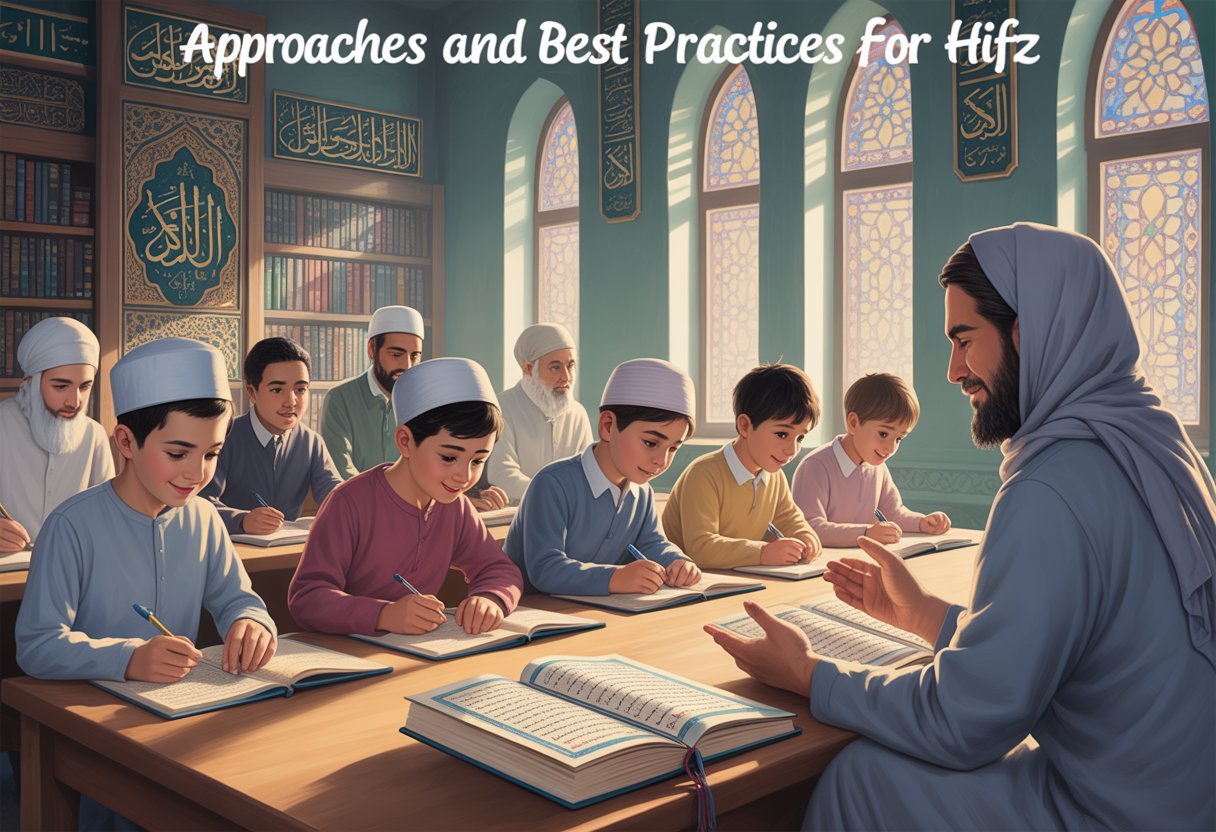
Successful Hifz needs three things: proper pronunciation through tajweed rules, guidance from experienced teachers, and proven memorisation techniques. These elements work together for a strong Quranic memorisation foundation.
Role of Tajweed in Hifz
Tajweed is the backbone of proper Hifz. Students really need to learn correct pronunciation before diving into memorisation.
Essential Tajweed Elements:
- Makharij (letter origins)—where each Arabic letter comes from
- Sifaat (letter characteristics)—how letters sound
- Ghunnah—nasal sounds in certain letters
- Qalqalah—echoing sounds for specific letters
UK Quran Academy puts a strong focus on tajweed training at the start of our hifz programme. Students who skip this foundation often find themselves struggling later on.
Poor pronunciation habits are tough to fix after memorisation. Teachers always recommend mastering basic tajweed rules first.
Common Tajweed Mistakes:
- Mixing similar-sounding letters
- Incorrect vowel lengths
- Missing nasal sounds
- Wrong letter emphasis
Regular practice with audio recordings helps students hear correct pronunciation. Many in the UK benefit from listening to renowned Qaris.
Importance of a Quran Teacher
A qualified Quran teacher is essential for the memorisation journey. Self-study often leads to mistakes that are hard to correct later.
Teacher Benefits:
- Corrects pronunciation errors on the spot
- Creates structured learning plans
- Provides motivation during tough periods
- Monitors progress and adjusts methods
Experienced teachers understand that everyone learns differently. Some students need repetition, others do better with visual aids.
UK Quran Academy matches students with teachers who get their unique needs. Our teachers track each student’s progress weekly and adjust as needed.
What Good Teachers Provide:
- Daily revision schedules
- Error correction techniques
- Memorisation speed guidance
- Emotional support during challenges
Online classes have made quality teachers way more accessible. Students across the UK can now learn from certified instructors, no matter where they live.
Teachers also help students maintain previously memorised portions. This prevents forgetting earlier verses while learning new ones.
Effective Memorisation Techniques
There are several proven methods for memorising Quranic verses efficiently. Everyone learns a bit differently, so it’s worth experimenting.
Popular Memorisation Methods:
| Method | Description | Best For |
|---|---|---|
| Repetition | Reading verses multiple times | Visual learners |
| Audio listening | Playing recordings repeatedly | Auditory learners |
| Writing practice | Copying verses by hand | Kinesthetic learners |
| Chunking | Breaking verses into small parts | All learning styles |
Daily Practice Structure:
- New lesson—Learn 3-5 new lines
- Previous day—Review yesterday’s portion
- Weekly revision—Go through the week’s work
- Monthly review—Recite longer passages
Set realistic daily targets. Trying to learn too much at once usually leads to poor retention—trust me, slow and steady works best.
Memory Retention Tips:
- Practice at the same time daily
- Use the same Mushaf (Quran copy)
- Recite during prayers if possible
- Create a quiet study environment
UK Quran Academy recommends mixing multiple techniques for the best results. This approach works for different learning styles and helps strengthen memory even more.
We’re here to help you memorise the Quran, whether you’re a total beginner or looking to get back on track. Our expert teachers and scholars are dedicated to making your memorisation journey smoother and more meaningful. At UK Quran Academy, we focus on helping you not just memorise, but also truly understand and remember the Quran in the best possible way.
Life of a Hafiz and Community Impact
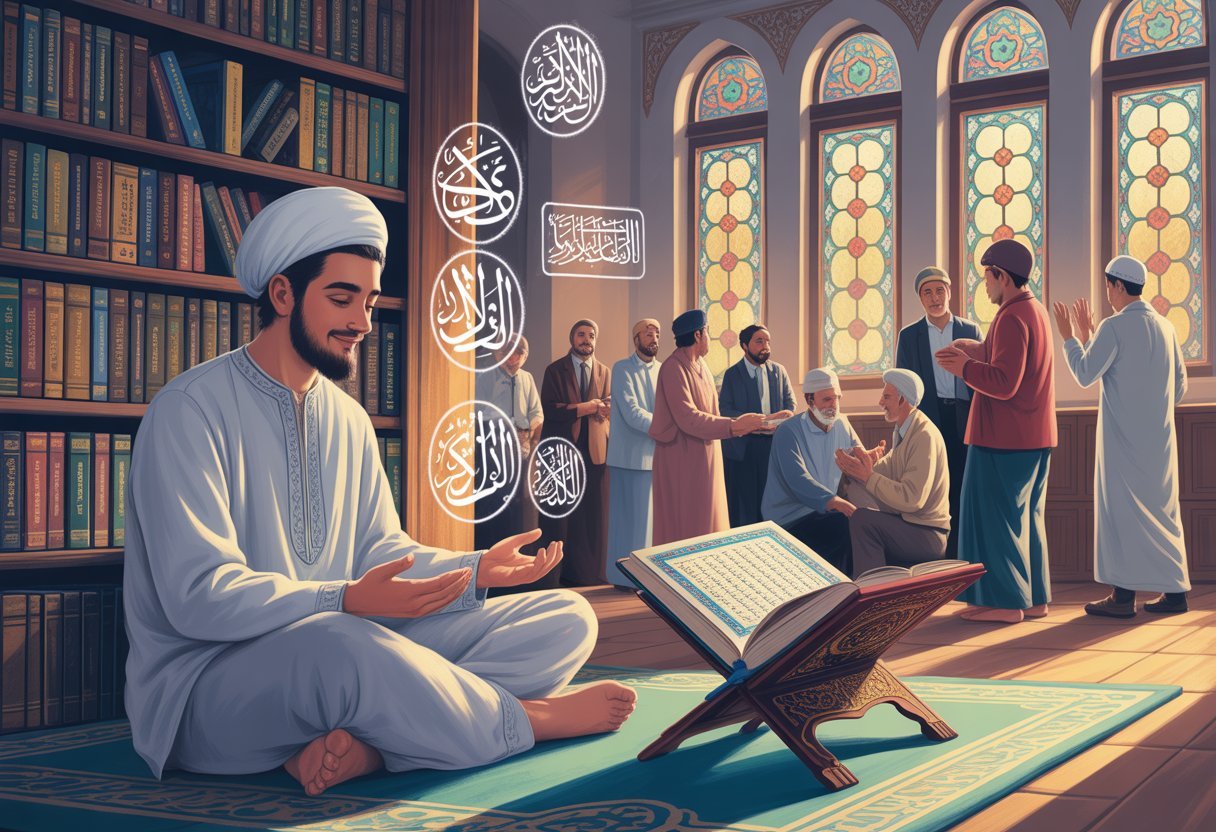
A hafiz in Islam holds positions of respect and responsibility that extend far beyond personal achievement. The benefits of being a hafiz create ripple effects that strengthen families, communities, and Islamic scholarship for generations.
Leadership Roles in the Muslim Community
Huffaz naturally take on important leadership positions within mosques and Islamic centres across the UK. They often serve as imams during daily prayers and lead the special Taraweeh prayers during Ramadan.
Many huffaz become Quran teachers in madrasahs and community schools. Their deep knowledge of tajweed and memorisation techniques makes them ideal instructors for the next generation.
Community members frequently seek guidance from huffaz on religious matters. They serve as spiritual advisors and help resolve questions about Islamic practices and teachings.
During interfaith dialogue events, huffaz represent Islam with authority and knowledge. Their ability to recite verses accurately helps build bridges between different faith communities in British society.
If you’re hoping to become a hafiz or help your child on this journey, UK Quran Academy is here to support you every step of the way. Our teachers and scholars are passionate about guiding students to memorise, understand, and cherish the Quran for a lifetime.
Family and Social Benefits
Families with a hafiz member often find themselves gaining extra social standing within Muslim communities. Parents of huffaz, in particular, receive a special kind of recognition and respect for supporting their child’s religious journey.
The discipline and dedication needed for hifz tend to shape positive character traits that ripple through family relationships. Huffaz usually show more patience, responsibility, and a knack for managing their time.
Marriage prospects? They get a boost for huffaz, since families often look for partners with strong religious roots. This opens up chances to build homes that are really centered on Islamic values.
Huffaz become role models for siblings and extended family. Their commitment can inspire others at home to build a closer connection with the Quran.
Contribution to Islamic Scholarship
Many huffaz go on to pursue advanced Islamic studies. They become scholars and researchers, helping to preserve Islamic knowledge for the next generation.
Memorisation gives them a solid base for diving into hadith, fiqh, and tafsir. They often help with Quranic research, spotting links between verses and backing up scholarly interpretations with accurate recitation.
This kind of work keeps Islamic texts authentic. Huffaz also write books, articles, and other educational materials that really benefit the wider Muslim community.
With their deep understanding of Quranic language, their contributions stand out in the scholarly world. By teaching and mentoring, huffaz pass on not just memorisation but also the spiritual and intellectual traditions of Islam.
Challenges in Quran Memorisation

Many students hit some real hurdles when memorising the Quran. Memory retention issues and squeezing study time into packed schedules are just the start.
Staying focused can be tough, and finding truly qualified instruction isn’t always easy. Motivation sometimes dips during the long hifz journey.
Common Obstacles for Learners
Memory retention is probably the biggest headache for most hifz students. As they add new verses, it’s normal to forget some of the old ones, which can feel pretty discouraging.
Time management is another major hurdle. Balancing revision with learning new passages? Easier said than done, and without a plan, old verses start slipping away.
Qualified instruction isn’t always around the corner. Students really need experienced teachers to help with pronunciation and proper guidance. Poor teaching methods can lead to mistakes that are tough to fix later on.
Concentration problems are all too common. With so many modern distractions, it’s harder than ever to stay focused during memorisation sessions.
Physical fatigue can also take a toll. Trying to rush memorisation often just leads to stress and lower retention. The brain needs time to rest and process new information.
Balancing Hifz with Modern Life
Work commitments make things tricky for adults trying to memorise the Quran. Long hours at work can leave little energy for focused study, so weekends sometimes become the only real option.
Family responsibilities can be a juggling act for parents. Childcare, housework, and family time all compete with study sessions. Many parents find that early mornings or late nights are their best bet.
Social obligations can disrupt routines too. Family events and community gatherings eat into memorisation time, so students have to get creative with their schedules.
Technology distractions, like phones and social media, are everywhere. They can really mess with concentration, so setting up device-free study zones is a smart move.
UK Quran Academy understands these challenges. That’s why we help you memorise the Quran by offering flexible study plans that fit around your life, not the other way around.
Our expert teachers and scholars are here to guide you, correct your recitation, and keep you motivated. At UK Quran Academy, we focus on helping you not just memorise, but really understand and remember the Quran in a way that sticks.
Staying Motivated on the Hifz Journey
Progress tracking gives students a real sense of how far they’ve come. Sometimes, it feels like nothing’s moving, but keeping a record of verses and pages you’ve memorized makes the progress obvious—even on those slow days.
Let’s be honest, without some way to see our achievements, motivation just fizzles out. That’s why visible proof of advancement matters so much.
Setting realistic goals is a huge deal. If you bite off more than you can chew, burnout creeps in fast.
Breaking memorization into smaller, doable targets keeps things steady. It’s not about racing—it’s about not getting overwhelmed.
Finding study partners makes a real difference. When you’re learning with someone else, there’s a little extra push to keep going.
Group revision sessions? They’re not just about accountability—they help you spot weak spots you might miss alone. Plus, it’s just more fun.
Celebrating milestones is underrated. Every time you finish a surah, take a moment to appreciate it.
Those little celebrations actually fuel you to keep moving forward. It doesn’t have to be a big party—sometimes, just acknowledging the moment is enough.
Connecting with qualified Quran teachers is a game changer. Having someone who’s been through it and understands the struggles can make all the difference.
Regular feedback from teachers keeps you motivated and on track. They know what works and what doesn’t from experience.
At UK Quran Academy, we’re here to help you memorize the Quran in a way that actually works. Our expert teachers and scholars don’t just help you remember—they help you understand the Quran, too.
We believe that memorization isn’t just about repetition; it’s about real connection and understanding. UK Quran Academy is all about making your hifz journey smoother, more meaningful, and honestly, a bit more enjoyable.
Leave A Comment